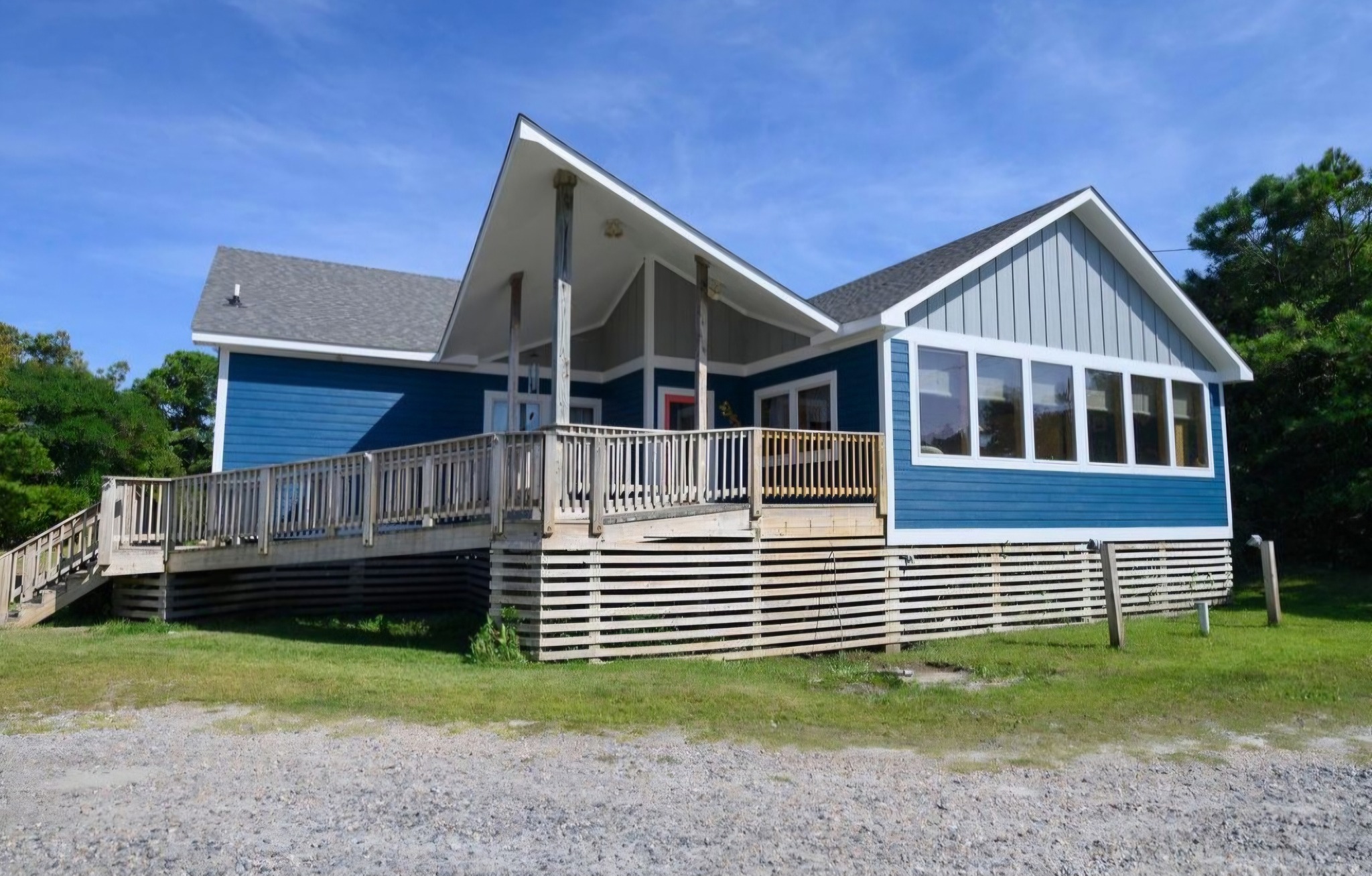

The Cape Hatteras Elementary School (CHEM) publishes a monthly newsletter called The Storm Report for students, parents, supporters, and friends. The newsletter is a nod to the school’s mascot, the Cape Hatteras Tropical Storms. The newsletter covers everything from upcoming special events to recent initiatives in art, technology, music, media, and more. It is a [...]
Community News Brief | Full Article
Featured Outer Banks News

What's New
Ocracoke is an island where folks think they can find the purported treasure of Blackbeard, but island homes and businesses will unveil their own treasures for all to peruse and plunder as the Ocracoke Civic & Business Association hosts the spring Ocracoke Island-Wide Yard Sale from 8 a.m. to 5 p.m. on Saturday, May 4. [...] Community News Brief | Full ArticleMeet the Outer Banks SPCA pet of the week, courtesy of their latest video produced by Dare County’s CURRENT TV. For more information on this pet, and the many other Outer Banks pets currently up for adoption, visit the Outer Banks SPCA website at https://www.obxspca.org/, or their Facebook page at https://www.facebook.com/obxspca/Outer Banks motorists can expect a much smoother ride between Nags Head and Manteo this summer as the westbound lanes of the Washington Baum (Pirate’s Cove) Bridge on U.S. 64 reopen to traffic on Friday. Beginning tonight, traffic will be switched to both outside lanes as workers make final preparations for a compete traffic shift [...] Local News | Full ArticleHotline Thrift Store is returning to Hatteras Island with a new Fr ...
April 22, 2024 | Island Features | By: Joy Crist
The Hotline South Thrift Store has been a Hatteras Island fixture for two decades, but for a brief spell in 2024, the island community was concerned that the store was in danger of permanently closing. After leasing retail space in Buxton for roughly 20 years, the store discovered in 2023 that they would need to [...] Island Features | Full ArticleBuxton Civic Association launches online petition for immediate ac ...
April 22, 2024 | Local News | By: Joy Crist | 1
The Buxton Civic Association (BCA) recently launched a Change.org petition to encourage the public to demand an immediate solution for the environmental and public safety hazards at Buxton Beach. The online petition is part of a flood of recent initiatives by the BCA to quickly facilitate a resolution for the roughly 500-yard shoreline at the end of [...] Local News | Full ArticleFrom OuterBanksVoice.com A new hotel is set to open in Rodanthe this June, according to representatives of Edgecamp Pamlico Station. The new lodging facility is a 14-suite-style boutique hotel that will be located at 24267 NC 12 in Rodanthe with an ownership team led by Richard Fertig, CEO of Stomp Capital and Owner of Edgecamp Pamlico Station. [...] Community News Brief | Full ArticleDare Housing Task Force to convene special April 22 meeting with s ...
April 22, 2024 | Real Estate | By: Mark Jurkowitz
From OuterBanksVoice.com Following up on a decision taken at the April 16 Dare County Housing Task Force meeting, that group will hold a special meeting on Monday, April 22 at 3:30 p.m. with State Senators Norman Sanderson and Bobby Hanig. The agenda for the meeting states it is being called to “discuss the housing challenges [...] Real Estate | Full ArticleEarly voting for North Carolina’s 2024 statewide second primary election—which will be held on Tuesday, May 14, 2024, for the Republican candidates running for the offices of North Carolina Lieutenant Governor and North Carolina Auditor only—will begin on Thursday, April 25, 2024. Also known as a runoff election, a second primary election is held when [...] Local News | Full ArticleOuter Banks Nonprofits celebrate collaboration at 2nd Annual Missi ...
April 21, 2024 | Community News Brief
The Outer Banks Community Foundation and the Outer Banks Visitors Bureau hosted the 2nd Annual Nonprofit Mission Mixer at the Outer Banks Brewing Station on April 11. The free event was an opportunity for local nonprofits to network with others who are making a difference in the community. With over 75 people in attendance from [...] Community News Brief | Full ArticleOyster Roast on May 11 will benefit the Frisco-Buxton Pathway
April 20, 2024 | Island Features | By: Joy Crist
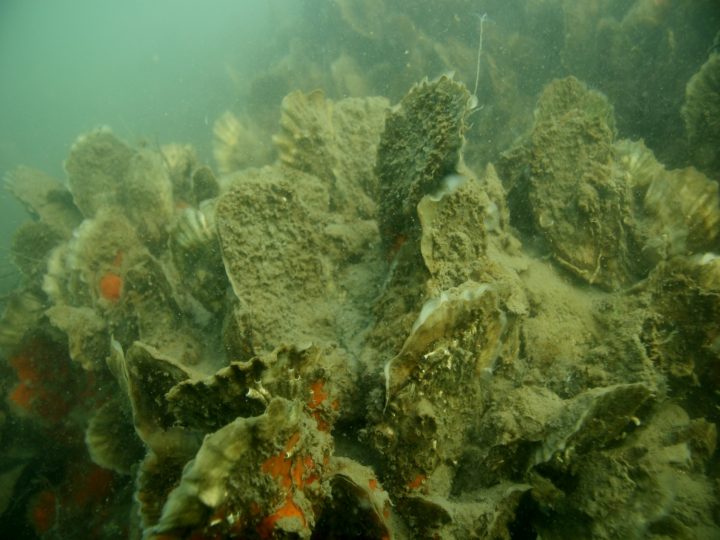
The community is invited to an oyster roast on Saturday, May 11, at the Frisco Woods Campground, with oysters, barbecue, Lost Colony Beer, a bounce house, and live music, which will all combine to raise funds for the Frisco-Buxton Pathway. The Oyster Roast is from 4 p.m. to 7 p.m. and is $40 for adults and [...] Island Features | Full ArticleNOVEMBER 2, 1977 – APRIL 16, 2024 On April 16, 2024, Donald Christopher Oden, 46, of Orange Park, Florida, passed away. Born November 2, 1977, in Elizabeth City, North Carolina, Don was the precious son of Jane Oden and the late Dan Oden, Sr. Don is survived by his partner, Jennifer Rodriguez; his brother, Dan [...] Local News | Full Article-
Cape Hatteras Lighthouse restoration contractor plans to activate ...
April 24, 2024 | Local News | By: Joy Crist
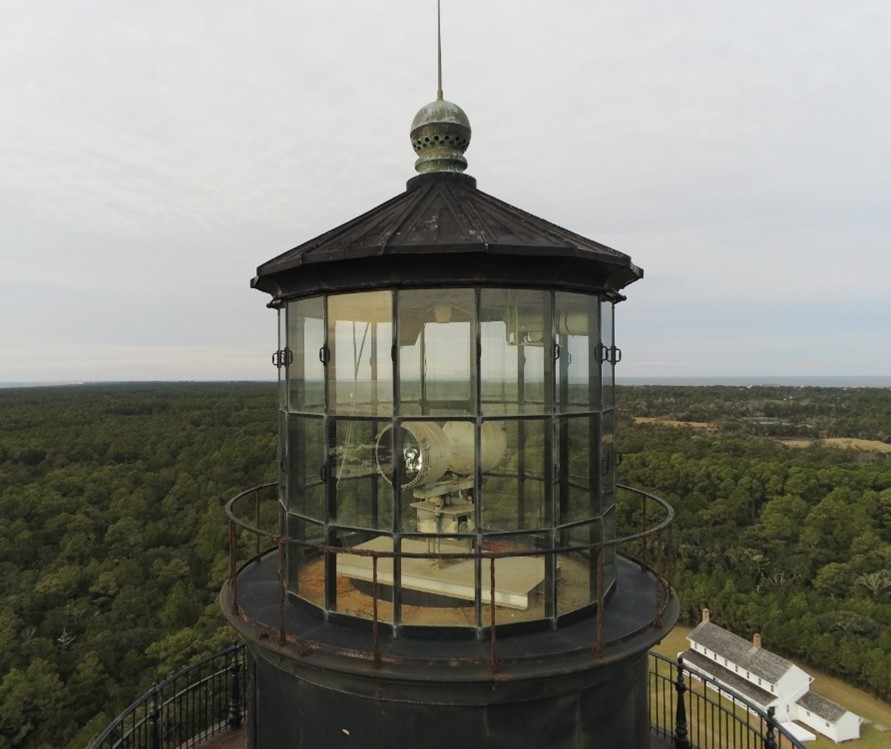
The contractor for the Cape Hatteras Lighthouse restoration project, Stone and Lime Historic Restoration Services, plans to switch the lighthouse’s source of light from the current beacon to a temporary, fixed beacon on the evening of Thursday, April 25. “This [new] tiny beacon can project 18 miles out into the ocean, it’s U.S. Coast Guard approved, [...] Local News | Full ArticleOuter Banks motorists can expect a much smoother ride between Nags Head and Manteo this summer as the westbound lanes of the Washington Baum (Pirate’s Cove) Bridge on U.S. 64 reopen to traffic on Friday. Beginning tonight, traffic will be switched to both outside lanes as workers make final preparations for a compete traffic shift [...] Local News | Full Article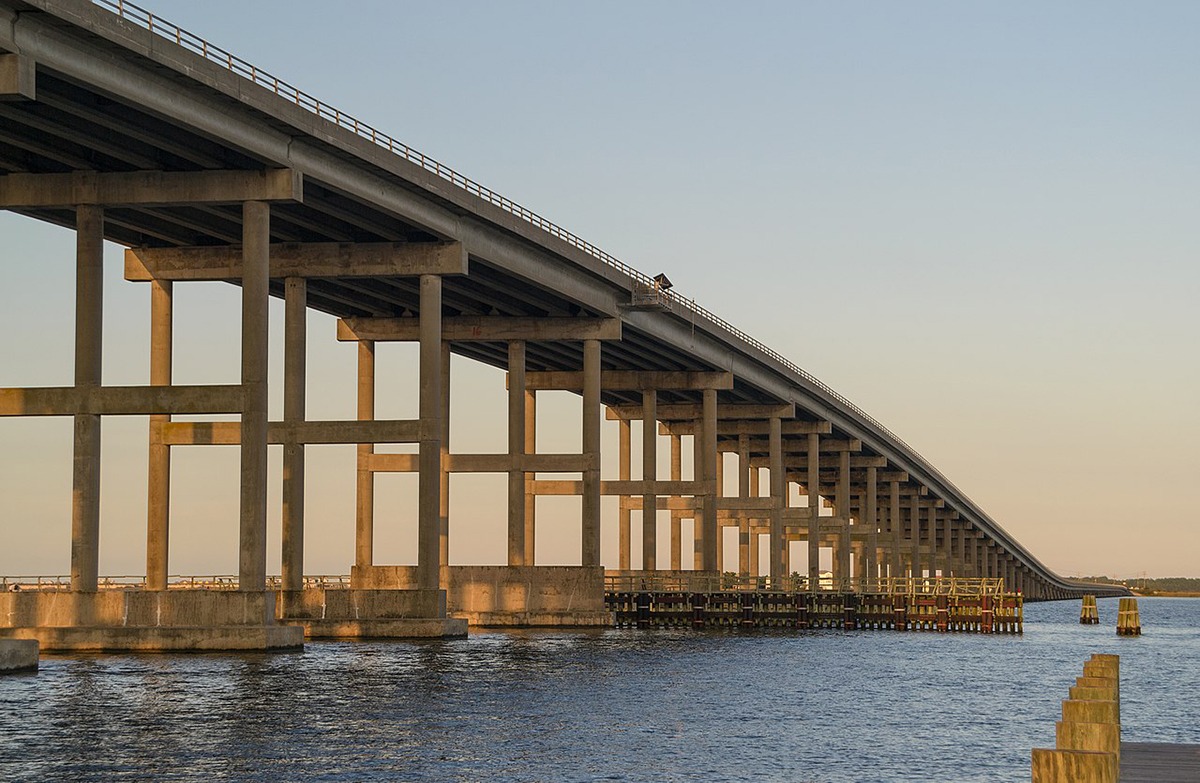
Cape Hatteras Lighthouse restoration contractor plans to activate ...
April 24, 2024 | Local News | By: Joy Crist
The contractor for the Cape Hatteras Lighthouse restoration project, Stone and Lime Historic Restoration Services, plans to switch the lighthouse’s source of light from the current beacon to a temporary, fixed beacon on the evening of Thursday, April 25. “This [new] tiny beacon can project 18 miles out into the ocean, it’s U.S. Coast Guard approved, [...] Local News | Full ArticleOuter Banks motorists can expect a much smoother ride between Nags Head and Manteo this summer as the westbound lanes of the Washington Baum (Pirate’s Cove) Bridge on U.S. 64 reopen to traffic on Friday. Beginning tonight, traffic will be switched to both outside lanes as workers make final preparations for a compete traffic shift [...] Local News | Full Article

Buxton Civic Association launches online petition for immediate ac ...
April 22, 2024 | Local News | By: Joy Crist | 1
The Buxton Civic Association (BCA) recently launched a Change.org petition to encourage the public to demand an immediate solution for the environmental and public safety hazards at Buxton Beach. The online petition is part of a flood of recent initiatives by the BCA to quickly facilitate a resolution for the roughly 500-yard shoreline at the end of [...] Local News | Full ArticleEarly voting for North Carolina’s 2024 statewide second primary election—which will be held on Tuesday, May 14, 2024, for the Republican candidates running for the offices of North Carolina Lieutenant Governor and North Carolina Auditor only—will begin on Thursday, April 25, 2024. Also known as a runoff election, a second primary election is held when [...] Local News | Full ArticleNOVEMBER 2, 1977 – APRIL 16, 2024 On April 16, 2024, Donald Christopher Oden, 46, of Orange Park, Florida, passed away. Born November 2, 1977, in Elizabeth City, North Carolina, Don was the precious son of Jane Oden and the late Dan Oden, Sr. Don is survived by his partner, Jennifer Rodriguez; his brother, Dan [...] Local News | Full ArticleN.C. Department of Transportation contractors will soon begin driving as many as 18 concrete test piles into the bed of the Alligator River, an important step in the project to replace the Lindsay C. Warren (Alligator River) Bridge on U.S. 64 between Tyrrell and Dare counties. Skanska USA will be overseeing the test pile project, [...] Local News | Full ArticleWork underway to repair and replace sandbags on Ocracoke Island; S ...
April 18, 2024 | Local News | By: Joy Crist
A project to repair and replace sandbags along N.C. Highway 12 on the north end of Ocracoke Island is underway, and a single-lane closure is in effect due to the ongoing work, per an update from the North Carolina Department of Transportation (NCDOT). “While work is in progress, there will be a short single-lane closure [...] Local News | Full ArticleNC State researchers predict active 2024 hurricane season
April 18, 2024 | Local News | By: Sam Walker
From SamWalkerOBXNews.com The 2024 Atlantic hurricane season begins in less than two months, and already a pair of preseason predictions are calling for it to be a busy one. On the heels of researchers at Colorado State University making their highest-ever early call for the number of hurricanes, a team at N.C. State University is [...] Local News | Full ArticleSELC joins Buxton Civic Association to push for action at Buxton Beach
April 16, 2024 | Local News | By: Joy Crist | 1
The Buxton Civic Association has joined forces with the Southern Environmental Law Center (SELC) to push for the immediate remediation of a 500-yard section of Buxton shoreline. The Buxton Civic Association (BCA) was formed in early April to create a united community voice for the growing public safety and environmental issues that have stemmed from [...] Local News | Full ArticleA line of clouds created an impressive show on the Outer Banks on Tuesday morning, April 16, which was caught on camera by a number of Hatteras Island residents and visitors. “Cool wave clouds called an undular bore moved across the Outer Banks this morning,” stated Brad Panovich, Chief Meteorologist for WCNC-TV, in a trending [...] Local News | Full ArticleFederal grant to pay for study of N.C. Highway 12 on Pea Island
April 15, 2024 | Local News | By: Sam Walker | 3
From SamWalkerOBXNews.com A federal grant aimed at improving transportation resiliency will pay for a study of options for the future of N.C. 12 between Oregon Inlet and Rodanthe. The U.S. Department of Transportation recently announced as part of the Bipartisan Infrastructure Law that $1.8 million has been earmarked for the study of the 11-mile section [...] Local News | Full ArticleNorth Carolina’s first Wawa opens May 16 in Kill Devil Hill
April 14, 2024 | Local News | By: Sam Walker
From SamWalkerOBXNews.com North Carolina’s first Wawa opens May 16 in Kill Devil Hills The long-awaited arrival of Wawa convenience stores to North Carolina will happen next month in Kill Devil Hills. The Pennsylvania-based chain has announced the doors will open at 1900 North Croatan Highway on Thursday, May 16, at 8 a.m., with a ribbon [...] Local News | Full ArticleUPDATE: N.C. Highway 12 has reopened on northern Ocracoke Island as of 5:00 p.m. on Friday, and ferry service has resumed, per an update from the North Carolina Department of Transportation (NCDOT). “Good news! NC12 on the north end of Ocracoke reopened at 5 pm today.,” stated NCDOT in a social media update. “NCDOT removed [...] Local News | Full ArticleUncle Eddy’s in Buxton significantly damaged in early morning fire
April 12, 2024 | Local News | By: Joy Crist
The main building at Uncle Eddy’s Frozen Custard and Mini Golf at 46878 N.C. Highway 12 in Buxton was severely damaged by a fire that occurred in the early morning hours of Friday, April 12. The Buxton Volunteer Fire Department (VFD) was dispatched at 12:13 a.m. on Friday, and Hatteras and Frisco VFDs, as well as the [...] Local News | Full Article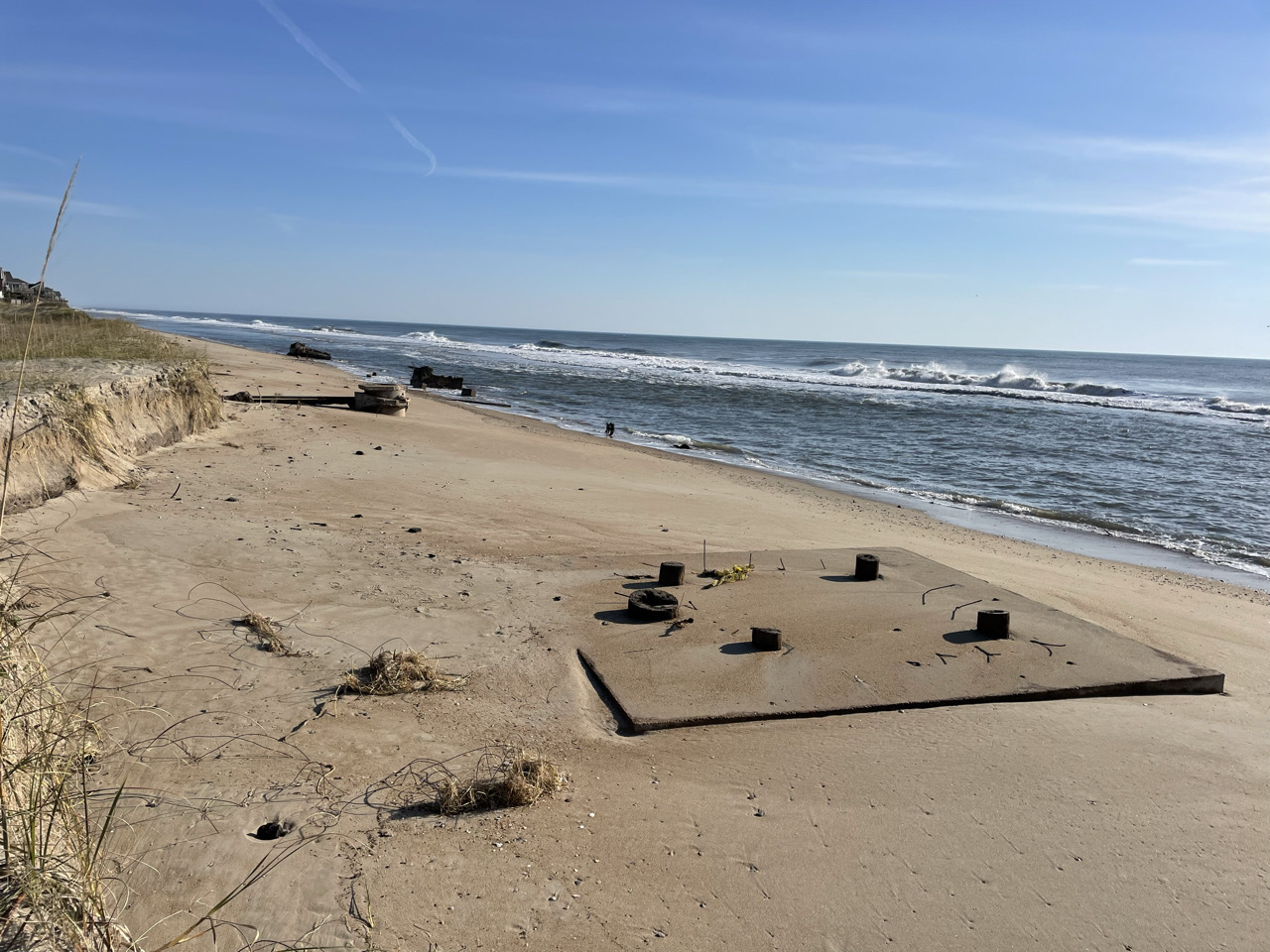
FAQs for Buxton Beach added to Cape Hatteras National Seashore’s webpage
April 16, 2024 | Seashore News | By: Joy Crist
The Cape Hatteras National Seashore (CHNS) has added a new FAQ section to its Buxton Beach webpage in order to provide essential information on the evolving public safety and environmental issues that are occurring along a 500-yard stretch of Buxton shoreline. “Frequently asked questions for the Buxton Beach Access closure were developed by [the] Cape Hatteras National Seashore after attending multiple public meetings on the topic, and speaking with many members of the Outer Banks community,” stated Michael Barber, Public Affairs Specialist for CHNS. “We plan to continue speaking with the public about the formerly used defense site and will provide updates at go.nps.gov/buxtonbeach.” A small section of beach has been closed to the public since September 2023 when two offshore hurricanes – Franklin and Idalia – brushed the Outer Banks, exposing abandoned infrastructure from [...] Seashore News | Full Article
Bodie Island Lighthouse opens for climbing on April 19
April 15, 2024 | Seashore News | By: Joy Crist
The Bodie Island Lighthouse, recognized by its unique horizontal black and white stripes, will open for climbing this year beginning Friday, April 19. Climbing tickets go on sale at 7 a.m. and may only be purchased on the same day of your intended climb. Tickets are only available for purchase at www.recreation.gov/ticket/252034/ticket/10087143. Pro tip: Create your www.recreation.gov account [...] Seashore News | Full ArticleNational Park Service seeks information on human-caused fires at F ...
April 15, 2024 | Seashore News
On Sunday morning, National Park Service law enforcement rangers responded to a report of two wildfires adjacent to Fort Raleigh National Historic Site’s Freedom Trail. Both fires were safely extinguished and posed no risk to public safety. Since the fires are suspected of being human caused, the National Park Service is asking the public for [...] Seashore News | Full ArticleSeasonal off-road vehicle (ORV) routes in front of Hatteras Island villages and the Ocracoke Campground become pedestrian-only starting on Monday, April 15. These routes, which run parallel to the towns of Hatteras, Frisco, Avon, and the Tri-villages, open to ORVs annually in the winter months when the visitor population is low, and close from April [...] Seashore News | Full ArticleCape Hatteras National Seashore will maintain gravel portion of Fl ...
April 12, 2024 | Seashore News
As a result of feedback received from the public during a two-week-long comment period, including residents that live on Flowers Ridge Road in Buxton, Cape Hatteras National Seashore (Seashore) has decided not to pave the 400-foot-long section of the road that leads into the private neighborhood. The Seashore requested funding for the road paving project [...] Seashore News | Full ArticleScaffolding around Cape Hatteras Lighthouse is 95% complete; Tempo ...
April 11, 2024 | Seashore News | By: Joy Crist
Despite multiple storms over the past few weeks, there have been waves of progress on the Cape Hatteras Lighthouse restoration project, starting with the tower of scaffolding. “We are closing in on 95% complete, so we expect to be done with the outside [scaffolding] by the end of April,” said Ed Milch, General Superintendent for [...] Seashore News | Full ArticleThe National Park Service’s Frisco campground reopened for the 2024 season on Saturday, March 30, per an update from the Cape Hatteras National Seashore (CHNS). Hatteras Island’s other seasonal CHNS campground, the Cape Point Campground in Buxton, remains temporarily closed due to flooding of low-lying campsites from the recent heavy rains. The Frisco and Cape [...] Seashore News | Full ArticleThe Cape Hatteras National Seashore (Seashore) invites public review and comments on a proposed project to pave a small section of road at the intersection of Lighthouse Road and Flowers Ridge Road in Buxton. Public comments will be accepted from March 28 through April 10, 2024. The current roadbed at the Seashore’s boundary is gravel [...] Seashore News | Full ArticleREMINDER: Cape Hatteras National Seashore will host public meeting ...
March 27, 2024 | Seashore News
On Wednesday, March 27, from 6-7 p.m., the public is invited to receive updates on the status of petroleum contamination and hazardous infrastructure remediation at Cape Hatteras National Seashore’s (CHNS) Buxton Beach Access. The public meeting will occur at the Fessenden Center, which is located at 46830 N.C. Highway 12 in Buxton, North Carolina. Following [...] Seashore News | Full ArticleNational Seashore temporarily expands beach closure at Buxton Beac ...
March 24, 2024 | Seashore News
Cape Hatteras National Seashore (Seashore) personnel expanded the size of a previously closed beach area in Buxton on Sunday afternoon, March 24. The expansion closes the Buxton Beach Access, located at the end of Old Lighthouse Road, and an additional stretch of beach, due to reports of petroleum odors and sheen on the ocean water. [...] Seashore News | Full ArticleTopIsland History: Memories of Ocracoke residents from 1942, preserved for all time
April 24, 2024 | Island Features | By: Kevin Duffus
The kindly, great-grandfather of 17 children smiled uncomfortably as he sat in front of a large TV camera, with lights glaring, a microphone clipped to his blue, black, and gray flannel shirt, and strangers about to ask him to relive one of the most horrific, heart-rending moments of his life. His name was Ulysses Levi "Mac" Womac, a 20-year veteran of the U.S. Coast Guard and an employee of the National Park Service for another 17 years. Just 18 years old in January 1942, the native Tennesseean, unfamiliar with boats and the sea, was assigned to the Coast Guard station at Ocracoke, seemingly far from the carnage of the Second World War. In the background, a fish tank pump gurgled softly as his family stood out of view in a corner of the room. No one in the room moved or made a sound. The old timer’s eyes seemed to focus beyond the walls, beyond the veil of time, as he transported th [...] Island Features | Full Article
Oyster Roast on May 11 will benefit the Frisco-Buxton Pathway
April 20, 2024 | Island Features | By: Joy Crist
The community is invited to an oyster roast on Saturday, May 11, at the Frisco Woods Campground, with oysters, barbecue, Lost Colony Beer, a bounce house, and live music, which will all combine to raise funds for the Frisco-Buxton Pathway. The Oyster Roast is from 4 p.m. to 7 p.m. and is $40 for adults and [...] Island Features | Full ArticleCHSS Theater Program’s biggest production yet, “The Li ...
April 19, 2024 | Island Features | By: Joy Crist
Since December 2023, the talented students at Cape Hatteras Secondary School (CHSS) have been working hard to launch one of their most ambitious theater productions yet. The upcoming production of “The Little Mermaid,” which is hitting the stage April 19-21, has a crew of approximately 100 students and volunteers working behind the scenes, perfecting every [...] Island Features | Full ArticleOcracoke Island Waterfowl Festival will be held April 20-21
April 19, 2024 | Island Features | By: Joy Crist
The 6th Annual Ocracoke Island Waterfowl Festival will be held on Saturday, April 20, from 9:00 a.m. until 5:00 p.m., and Sunday, April 21, from 10 a.m. to 3 p.m. at the Ocracoke School Gymnasium at 120 School House Road. Presented by the non-profit Ocracoke Island Decoy Carvers Guild, this annual event draws decoy carvers [...] Island Features | Full ArticleDare County has released a new video highlighting the Dare County Recreation Map, a unique interactive resource that allows users to locate a variety of different attractions and amenities throughout Dare County—including area beach accesses, boat launches, dog parks, picnic areas, fishing piers, ball fields, walking trails and so much more. “We created the Recreation [...] Island Features | Full ArticleBagheera, a cold-stunned Hawksbill Sea Turtle found in Avon, is ma ...
April 17, 2024 | Island Features | By: Joy Crist
A rare and cold-stunned Hawksbill Sea Turtle that was rescued in Avon over the winter is on its way to making a full recovery, per a social media update from the North Carolina Aquarium on Roanoke Island. The male Hawksbill Sea Turtle, named Bagheera, was discovered along the Pamlico Sound in Avon in December 2023 [...] Island Features | Full ArticleOcracoke’s pristine beaches, maritime nature trails, village gardens, glorious live oaks, and thriving wildlife inspire residents and visitors alike to appreciate and celebrate our beautiful island’s natural places. This year, to share the love of the island and the rest of the planet, the Ocracoke community is organizing the first annual Ocracoke Earth Day Weekend [...] Island Features | Full Article
Dare Housing Task Force to convene special April 22 meeting with state senators
April 22, 2024 | Real Estate | By: Mark Jurkowitz
From OuterBanksVoice.com Following up on a decision taken at the April 16 Dare County Housing Task Force meeting, that group will hold a special meeting on Monday, April 22 at 3:30 p.m. with State Senators Norman Sanderson and Bobby Hanig. The agenda for the meeting states it is being called to “discuss the housing challenges that are currently affecting the community.” At that April 16 meeting, The Task Force agreed to reach out to legislators in Raleigh and invite them to meet to hear feedback that will likely include a discussion of changing the legislation that provided $35 million in state funding for affordable housing in Dare County. That money came with a major string attached, a provision that restricted Dare County municipalities’ from regulating housing developments within their borders. That provision generated a lawsuit from the six Dare County towns and a resolution [...] Real Estate | Full Article
Dare Housing Task Force wants to incorporate more community voices ...
April 18, 2024 | Real Estate | By: Mark Jurkowitz
From OuterBanksVoice.com Meeting one week after the county commissioners voted to cut ties with its remaining affordable housing partner and return $35 million in housing funds to the state, the Dare County Housing Task Force made several decisions on how to move forward—including one that involves broadening and restructuring the group. Following the suggestion of [...] Real Estate | Full ArticleCoastal property owners yet to embrace roof-girding grants
April 16, 2024 | Real Estate | By: Catherine Kozak
From CoastalReview.org Maybe one North Carolina insurance provider should join the industry trend and advertise: “Hello Beach Plan policyholders! Do you need a new roof? Want to save on your property insurance? How about we help you out with as much as $8,000 toward a much stronger roof that is fortified to withstand storms? And [...] Real Estate | Full ArticleNorth Carolina Insurance companies have filed a request with the N.C. Department of Insurance to increase insurance rates for mobile home policies. The North Carolina Rate Bureau, which represents insurance companies and is not a part of the Department of Insurance, has requested an overall state average increase of 82.9% for mobile home fire policies [...] Real Estate | Full ArticleAnti-regulation sentiment may be fueling insurance crisis
April 8, 2024 | Real Estate | By: Catherine Kozak
First of a two-part series by Catherine Kozak, Coastal Review When Insurance Commissioner Mike Causey met last month in Manteo for a brief overview and Q&A with community members worried about property insurance issues, he stressed that his office had limited power over building code changes and insurance company business decisions in North Carolina that [...] Real Estate | Full ArticleState offering free flood insurance online conferences this year
March 28, 2024 | Real Estate | By: Sam Walker
From SamalkerOBXNews.com Five online conferences will be held between April and October to provide vital information regarding the need for flood insurance in North Carolina. The 2024 conferences will be similar to the ones offered in 2022 through WebEx, and will be free of charge to the public, insurance agents, adjusters, real estate agents, engineers, [...] Real Estate | Full ArticlePublic comment period opens for temporary rules to implement new mandatory harvest reporting law
April 24, 2024 | Fishing
The N.C. Marine Fisheries Commission and N.C. Wildlife Resources Commission are accepting public comments on temporary rules to implement mandatory harvest reporting requirements passed by the N.C. General Assembly in Session Law 2023-137, Section 6. The comment period will close at 5 p.m. on May 20, 2024. Members of the public may submit comments in any of the following ways: Marine Fisheries Commission Rules Through an online form By mail to: C. Marine Fisheries Commission Rules Comments P.O. Box 769 Morehead City, N.C. 28557 Wildlife Resources Commission Rule Through an online form By mail to: Rulemaking Coordinator C. Wildlife Resources Commission 1701 Mail Service Center Raleigh, N.C. 27699-1700 Emailed to regulations@ncwildlife.org (include name, county, and state of residence in e-mail) At a combined agency public hearing to be held virtually on May 1, 2024, at 6 p.m. Pre-reg [...] Fishing | Full Article
 Taking a minute for ourselves Those of us who live here on Hatteras are looking forward to a busy summer as we clean cottages, mix drinks, manage reservations, stock shelves, repair everything that breaks, and all work together to help our summer visitors make those precious memories that keep them coming back to Hatteras year [...] Community News Brief | Full ArticleThe Cape Hatteras Elementary School (CHEM) publishes a monthly newsletter called The Storm Report for students, parents, supporters, and friends. The newsletter is a nod to the school’s mascot, the Cape Hatteras Tropical Storms. The newsletter covers everything from upcoming special events to recent initiatives in art, technology, music, media, and more. It is a [...] Community News Brief | Full ArticleOcracoke is an island where folks think they can find the purported treasure of Blackbeard, but island homes and businesses will unveil their own treasures for all to peruse and plunder as the Ocracoke Civic & Business Association hosts the spring Ocracoke Island-Wide Yard Sale from 8 a.m. to 5 p.m. on Saturday, May 4. [...] Community News Brief | Full ArticleMeet the Outer Banks SPCA pet of the week, courtesy of their latest video produced by Dare County’s CURRENT TV. For more information on this pet, and the many other Outer Banks pets currently up for adoption, visit the Outer Banks SPCA website at https://www.obxspca.org/, or their Facebook page at https://www.facebook.com/obxspca/From OuterBanksVoice.com A new hotel is set to open in Rodanthe this June, according to representatives of Edgecamp Pamlico Station. The new lodging facility is a 14-suite-style boutique hotel that will be located at 24267 NC 12 in Rodanthe with an ownership team led by Richard Fertig, CEO of Stomp Capital and Owner of Edgecamp Pamlico Station. [...] Community News Brief | Full Article
Outer Banks Nonprofits celebrate collaboration at 2nd Annual Missi ...
April 21, 2024 | Community News Brief
The Outer Banks Community Foundation and the Outer Banks Visitors Bureau hosted the 2nd Annual Nonprofit Mission Mixer at the Outer Banks Brewing Station on April 11. The free event was an opportunity for local nonprofits to network with others who are making a difference in the community. With over 75 people in attendance from [...] Community News Brief | Full ArticleApril 9, 1951 – April 10, 2024 MANTEO — Charles “Chuck” Tomkinson III, age 73, of Manteo, NC, passed away on April 10, 2024. He was born on April 9, 1951, in Richmond, VA. Chuck led a fulfilling life centered around his passion for working with his hands and helping others in any way he [...] Obituaries | Full ArticleApril 10, 1948 – April 14, 2024 WAVES — Ronald H. Williams was born on April 10, 1948, in Manteo, NC, and peacefully passed away on April 14, 2024, at the age of 76 in Waves, NC. A man of few words, Ronald had the biggest impact on the lives of those around him. Retired [...] Obituaries | Full ArticleSeptember 11, 1935 – April 14, 2024 KITTY HAWK — Ann Weathersbee Davenport, of Kitty Hawk, NC, passed away peacefully on April 14, 2024, at the age of 88. Born on September 11, 1935, in Tarboro, NC, Ann lived a life dedicated to education and service. Dedicating over 30 years of her life as a [...] Obituaries | Full ArticleMarch 19, 1938 – April 11, 2024 MANTEO — John Bowen (Bo) Ross, Jr. passed away Thursday, April 11, 2024 on Roanoke Island, North Carolina. Bo was born to Margaret (Mot) Ellison Ross and John Bowen Ross on March 19, 1938 in Raleigh, NC. Bo spent most of his life in NC, living in Raleigh, [...] Obituaries | Full ArticleNovember 14, 1943 – April 8, 2024 BUXTON — Vivian Robinson Gray peacefully passed away in the early morning hours of April 8, 2024, at her home in Buxton, NC, with her husband, Charles, by her side. Vivian was a native daughter of Hatteras Island. She was born on November 14, 1943, to Vivian Eliza [...] Obituaries | Full ArticleO.R. “Bubba” Walke passed away peacefully on April 8, 2024, after a short illness, surrounded by his loved ones. Bubba lived a life full of compassion, kindness and unwavering love and dedication to his family and friends. His infectious smile, gentle spirit, easygoing and charismatic personality made him loved and respected by all who knew [...] Obituaries | Full Article
Hatteras and Ocracoke Islands’ Most Trusted News Source
(c) 2024 Island Free Press | Hyperlocal News Platform by MSP Media
Shopping Cart