
Judge Boyle keeps consent decree in place, but seashore still operating under final ORV rule
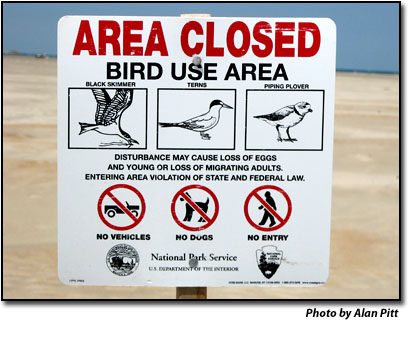
In a status conference today in Raleigh, U.S. District Court Judge Terrence Boyle kept in place a consent decree that settled a lawsuit against the National Park Service over its lack of an off-road vehicle plan and its management of protected species.
The consent decree was set to expire on Feb. 15, the day that the Park Service’s ORV plan and final rule for the Cape Hatteras National Seashore became effective.
At the conference today, Boyle said he would keep the consent decree in place for 120 days and meet again with the parties in June to assess the status of a lawsuit by beach access groups to stop the ORV plan and final rule.
That lawsuit was filed earlier this month in U.S. District Court in the District of Columbia by the Cape Hatteras Access Preservation Alliance.
Also today, Derb Carter, senior attorney for the Southern Environmental Law Center, said during the status conference that the environmental groups that sued the Park Service in 2007 and forced the consent decree, filed a motion yesterday in the District Court in Washington to intervene on behalf of the Park Service in the CHAPA lawsuit.
The groups are Defenders of Wildlife and the National Audubon Society, and they are joined in the motion to intervene by the National Parks Conservation Association.
What Boyle basically did today, said Bobby Outten, Dare County’s manager and attorney who attended the hearing, is “maintain the status quo.”
The seashore is still operating under the Park Service’s ORV management plan and final special regulation, though the consent decree is still on the books because, Boyle said, his court has an interest in the outcome of the CHAPA lawsuit.
“The court retained jurisdiction over the consent decree as required by its terms,” according to Derb Carter, attorney for the Southern Environmental Law Center, which represented the environmental groups in their lawsuit against the NPS.
“The consent decree requires the adoption of a special regulation to authorize driving on the beaches of Cape Hatteras National Seashore, Carter said this afternoon in an e-mail. “One party to the consent decree, CHAPA, has filed a lawsuit in the D.C. District Court, seeking to overturn and enjoin the final plan and regulation authorizing ORV use on the seashore, requirements of the consent decree. Since all the parties to the consent decree agreed that the court retains jurisdiction until all the requirements of the decree are met, the court with jurisdiction over the consent decree will decide whether and how those requirements have been met. Obviously, this will have implications on how, or whether, the CHAPA case will proceed in D.C. District Court.”
Boyle began today’s status conference by asking Carter, attorney for the Southern Environmental Law Center which represented the environmental groups in their lawsuit against the NPS, to go over what the lawsuit has accomplished to determine whether it’s over, whether there has been compliance, and whether the consent decree should end because the final plan has been implemented.
Carter gave some background, saying that the consent decree was called for based on the request for an injunction when the NPS was in violation of the requirement to have an ORV plan in place. All parties to the lawsuit – the federal government, the environmental groups, and CHAPA and Dare and Hyde County, which intervened on behalf of the NPS — agreed to keep the NPS Interim Plan as modified by the consent decree in place until the final regulatory plan was published.
The consent decree, Carter said, has been very successful.
Boyle noted that the status conference was topical because a separate lawsuit had been filed in District of Columbia federal court. The judge explained that his court still has jurisdiction over the original claim that was settled by the consent decree. He questioned to what extent the new beach driving plan is final if another group sues and the plan could be upset. Then, he said the original claim by the environmental groups would be back at square one.
Carter explained that SELC filed a motion yesterday to intervene in the D.C. lawsuit and noted the consent decree in that petition to inform the D.C. court that there is a local case to look out for in those proceedings.
Boyle asked how the case he has overseen can be finalized until the lawsuit to overturn the final plan is decided. There has to be a final plan, he said, to end this lawsuit before his court.
Carter noted the deadline set for the NPS implementation of the final plan and said that unless there is a final plan, then driving on the beach is prohibited. He said that the Interim Plan, modified by the consent decree, was to give protections to wildlife based on scientific evidence, and this was the backdrop to the process undertaken by the NPS to designate ORV routes.
Boyle asked if Carter has anything to add and turned his attention to Rudy Renfer, assistant U.S. attorney, who was representing the Park Service.
Boyle said that if this consent decree case should come to finality, implicit is that a plan is final and in place.
Renfer said that theoretically, the final regulations and administrative proceedings hadn’t been sanctioned by the court and that Boyle’s court retains jurisdiction
“Your client is in a catch 22 because two courts could order two different things,” Boyle noted. “Collateral estoppel ensures that you can’t have serial lawsuits over the validity of regulations. You can’t have a line of people who come in for a turn with a regulation.”
“I agree,” Renfer said, “but that’s up to the court in D.C. to decide.”
Under the legal definition of collateral estoppel, according to USLegal.com, “once a court has decided an issue of fact or law necessary to its judgment, that decision may preclude relitigation of the issue in a suit on a different cause of action involving a party to the first case.”
In other words, Boyle considers that the two cases – the one in his court and the one CHAPA filed in Washington – might be litigating the same issues.
Renfer then noted that CHAPA has not pushed for injunction relief, which he said, “is very telling of their perspective on the strength of their position.”
Boyle then asked seashore superintendent Mike Murray to take the stand to talk about the annual resource reports and his experience with the permitting process.
Murray said that 2011 was a good year and, under some parameters, the best year on record for nesting shorebirds and turtles.
He noted there were 15 nesting pairs of piping plovers and 10 fledged chicks. There were 23 breeding pairs of American oystercatchers and 1,289 colonial waterbird nests, which is the highest since 1997. Under the consent decree, he said, there is a trend of improvement on the status of these species.
Murray next described the permitting process, stating that people have been “99.9%” cooperative, but a few people are not happy. The seashore has issued between 300 and 400 permits so far.
Boyle asked if the number of permits is open-ended, if there is no cap on them.
“There is no cap,” Murray said, “but a carrying capacity has been determined and peak use will be limited if that capacity is reached. In the past four years, this has only happened on about three occasions, and now there will be a systematic approach for dealing with this issue.”
Boyle was very interested in how the new plan will actually look in action, how the NPS will manage permitting and regulating vehicles. He also asked questions about what is required of people applying for the permits, ensured that they could have access to the permits the same day they arrived at the beach, and that they are not required to have a four-wheel drive vehicle to access the ORV routes.
Murray answered that, while a four-wheel drive is recommended, it is not required for a permit.
After questions about how exactly permits will be monitored, Boyle noted that the process will provide a “treasure” of data that is currently only available anecdotally.
“You will be able to tell if local use is dominant or if transient use is dominant, and you will get a profile of beach users, because now it is all rumor and common folklore that it’s all people who are right there who use the beach,” he said.
Finally, Boyle continued the hearing and rescheduled in 120 days to see what happens with the ongoing consideration of the final plan by the court in Washington, D.C.
In a status conference today in Raleigh, U.S. District Court Judge Terrence Boyle kept in place a consent decree that settled a lawsuit against the National Park Service over its lack of an off-road vehicle plan and its management of protected species.
The consent decree was set to expire on Feb. 15, the day that the Park Service’s ORV plan and final rule for the Cape Hatteras National Seashore became effective.
At the conference today, Boyle said he would keep the consent decree in place for 120 days and meet again with the parties in June to assess the status of a lawsuit by beach access groups to stop the ORV plan and final rule.
That lawsuit was filed earlier this month in U.S. District Court in the District of Columbia by the Cape Hatteras Access Preservation Alliance.
Also today, Derb Carter, senior attorney for the Southern Environmental Law Center, said during the status conference that the environmental groups that sued the Park Service in 2007 and forced the consent decree, filed a motion yesterday in the District Court in Washington to intervene on behalf of the Park Service in the CHAPA lawsuit.
The groups are Defenders of Wildlife and the National Audubon Society, and they are joined in the motion to intervene by the National Parks Conservation Association.
What Boyle basically did today, said Bobby Outten, Dare County’s manager and attorney who attended the hearing, is “maintain the status quo.”
The seashore is still operating under the Park Service’s ORV management plan and final special regulation, though the consent decree is still on the books because, Boyle said, his court has an interest in the outcome of the CHAPA lawsuit.
“The court retained jurisdiction over the consent decree as required by its terms,” according to Derb Carter, attorney for the Southern Environmental Law Center, which represented the environmental groups in their lawsuit against the NPS.
“The consent decree requires the adoption of a special regulation to authorize driving on the beaches of Cape Hatteras National Seashore, Carter said this afternoon in an e-mail. “One party to the consent decree, CHAPA, has filed a lawsuit in the D.C. District Court, seeking to overturn and enjoin the final plan and regulation authorizing ORV use on the seashore, requirements of the consent decree. Since all the parties to the consent decree agreed that the court retains jurisdiction until all the requirements of the decree are met, the court with jurisdiction over the consent decree will decide whether and how those requirements have been met. Obviously, this will have implications on how, or whether, the CHAPA case will proceed in D.C. District Court.”
Boyle began today’s status conference by asking Carter, attorney for the Southern Environmental Law Center which represented the environmental groups in their lawsuit against the NPS, to go over what the lawsuit has accomplished to determine whether it’s over, whether there has been compliance, and whether the consent decree should end because the final plan has been implemented.
Carter gave some background, saying that the consent decree was called for based on the request for an injunction when the NPS was in violation of the requirement to have an ORV plan in place. All parties to the lawsuit – the federal government, the environmental groups, and CHAPA and Dare and Hyde County, which intervened on behalf of the NPS — agreed to keep the NPS Interim Plan as modified by the consent decree in place until the final regulatory plan was published.
The consent decree, Carter said, has been very successful.
Boyle noted that the status conference was topical because a separate lawsuit had been filed in District of Columbia federal court. The judge explained that his court still has jurisdiction over the original claim that was settled by the consent decree. He questioned to what extent the new beach driving plan is final if another group sues and the plan could be upset. Then, he said the original claim by the environmental groups would be back at square one.
Carter explained that SELC filed a motion yesterday to intervene in the D.C. lawsuit and noted the consent decree in that petition to inform the D.C. court that there is a local case to look out for in those proceedings.
Boyle asked how the case he has overseen can be finalized until the lawsuit to overturn the final plan is decided. There has to be a final plan, he said, to end this lawsuit before his court.
Carter noted the deadline set for the NPS implementation of the final plan and said that unless there is a final plan, then driving on the beach is prohibited. He said that the Interim Plan, modified by the consent decree, was to give protections to wildlife based on scientific evidence, and this was the backdrop to the process undertaken by the NPS to designate ORV routes.
Boyle asked if Carter has anything to add and turned his attention to Rudy Renfer, assistant U.S. attorney, who was representing the Park Service.
Boyle said that if this consent decree case should come to finality, implicit is that a plan is final and in place.
Renfer said that theoretically, the final regulations and administrative proceedings hadn’t been sanctioned by the court and that Boyle’s court retains jurisdiction
“Your client is in a catch 22 because two courts could order two different things,” Boyle noted. “Collateral estoppel ensures that you can’t have serial lawsuits over the validity of regulations. You can’t have a line of people who come in for a turn with a regulation.”
“I agree,” Renfer said, “but that’s up to the court in D.C. to decide.”
Under the legal definition of collateral estoppel, according to USLegal.com, “once a court has decided an issue of fact or law necessary to its judgment, that decision may preclude relitigation of the issue in a suit on a different cause of action involving a party to the first case.”
In other words, Boyle considers that the two cases – the one in his court and the one CHAPA filed in Washington – might be litigating the same issues.
Renfer then noted that CHAPA has not pushed for injunction relief, which he said, “is very telling of their perspective on the strength of their position.”
Boyle then asked seashore superintendent Mike Murray to take the stand to talk about the annual resource reports and his experience with the permitting process.
Murray said that 2011 was a good year and, under some parameters, the best year on record for nesting shorebirds and turtles.
He noted there were 15 nesting pairs of piping plovers and 10 fledged chicks. There were 23 breeding pairs of American oystercatchers and 1,289 colonial waterbird nests, which is the highest since 1997. Under the consent decree, he said, there is a trend of improvement on the status of these species.
Murray next described the permitting process, stating that people have been “99.9%” cooperative, but a few people are not happy. The seashore has issued between 300 and 400 permits so far.
Boyle asked if the number of permits is open-ended, if there is no cap on them.
“There is no cap,” Murray said, “but a carrying capacity has been determined and peak use will be limited if that capacity is reached. In the past four years, this has only happened on about three occasions, and now there will be a systematic approach for dealing with this issue.”
Boyle was very interested in how the new plan will actually look in action, how the NPS will manage permitting and regulating vehicles. He also asked questions about what is required of people applying for the permits, ensured that they could have access to the permits the same day they arrived at the beach, and that they are not required to have a four-wheel drive vehicle to access the ORV routes.
Murray answered that, while a four-wheel drive is recommended, it is not required for a permit.
After questions about how exactly permits will be monitored, Boyle noted that the process will provide a “treasure” of data that is currently only available anecdotally.
“You will be able to tell if local use is dominant or if transient use is dominant, and you will get a profile of beach users, because now it is all rumor and common folklore that it’s all people who are right there who use the beach,” he said.
Finally, Boyle continued the hearing and rescheduled in 120 days to see what happens with the ongoing consideration of the final plan by the court in Washington, D.C.
In a status conference today in Raleigh, U.S. District Court Judge Terrence Boyle kept in place a consent decree that settled a lawsuit against the National Park Service over its lack of an off-road vehicle plan and its management of protected species.
The consent decree was set to expire on Feb. 15, the day that the Park Service’s ORV plan and final rule for the Cape Hatteras National Seashore became effective.
At the conference today, Boyle said he would keep the consent decree in place for 120 days and meet again with the parties in June to assess the status of a lawsuit by beach access groups to stop the ORV plan and final rule.
That lawsuit was filed earlier this month in U.S. District Court in the District of Columbia by the Cape Hatteras Access Preservation Alliance.
Also today, Derb Carter, senior attorney for the Southern Environmental Law Center, said during the status conference that the environmental groups that sued the Park Service in 2007 and forced the consent decree, filed a motion yesterday in the District Court in Washington to intervene on behalf of the Park Service in the CHAPA lawsuit.
The groups are Defenders of Wildlife and the National Audubon Society, and they are joined in the motion to intervene by the National Parks Conservation Association.
What Boyle basically did today, said Bobby Outten, Dare County’s manager and attorney who attended the hearing, is “maintain the status quo.”
The seashore is still operating under the Park Service’s ORV management plan and final special regulation, though the consent decree is still on the books because, Boyle said, his court has an interest in the outcome of the CHAPA lawsuit.
“The court retained jurisdiction over the consent decree as required by its terms,” according to Derb Carter, attorney for the Southern Environmental Law Center, which represented the environmental groups in their lawsuit against the NPS.
“The consent decree requires the adoption of a special regulation to authorize driving on the beaches of Cape Hatteras National Seashore, Carter said this afternoon in an e-mail. “One party to the consent decree, CHAPA, has filed a lawsuit in the D.C. District Court, seeking to overturn and enjoin the final plan and regulation authorizing ORV use on the seashore, requirements of the consent decree. Since all the parties to the consent decree agreed that the court retains jurisdiction until all the requirements of the decree are met, the court with jurisdiction over the consent decree will decide whether and how those requirements have been met. Obviously, this will have implications on how, or whether, the CHAPA case will proceed in D.C. District Court.”
Boyle began today’s status conference by asking Carter, attorney for the Southern Environmental Law Center which represented the environmental groups in their lawsuit against the NPS, to go over what the lawsuit has accomplished to determine whether it’s over, whether there has been compliance, and whether the consent decree should end because the final plan has been implemented.
Carter gave some background, saying that the consent decree was called for based on the request for an injunction when the NPS was in violation of the requirement to have an ORV plan in place. All parties to the lawsuit – the federal government, the environmental groups, and CHAPA and Dare and Hyde County, which intervened on behalf of the NPS — agreed to keep the NPS Interim Plan as modified by the consent decree in place until the final regulatory plan was published.
The consent decree, Carter said, has been very successful.
Boyle noted that the status conference was topical because a separate lawsuit had been filed in District of Columbia federal court. The judge explained that his court still has jurisdiction over the original claim that was settled by the consent decree. He questioned to what extent the new beach driving plan is final if another group sues and the plan could be upset. Then, he said the original claim by the environmental groups would be back at square one.
Carter explained that SELC filed a motion yesterday to intervene in the D.C. lawsuit and noted the consent decree in that petition to inform the D.C. court that there is a local case to look out for in those proceedings.
Boyle asked how the case he has overseen can be finalized until the lawsuit to overturn the final plan is decided. There has to be a final plan, he said, to end this lawsuit before his court.
Carter noted the deadline set for the NPS implementation of the final plan and said that unless there is a final plan, then driving on the beach is prohibited. He said that the Interim Plan, modified by the consent decree, was to give protections to wildlife based on scientific evidence, and this was the backdrop to the process undertaken by the NPS to designate ORV routes.
Boyle asked if Carter has anything to add and turned his attention to Rudy Renfer, assistant U.S. attorney, who was representing the Park Service.
Boyle said that if this consent decree case should come to finality, implicit is that a plan is final and in place.
Renfer said that theoretically, the final regulations and administrative proceedings hadn’t been sanctioned by the court and that Boyle’s court retains jurisdiction
“Your client is in a catch 22 because two courts could order two different things,” Boyle noted. “Collateral estoppel ensures that you can’t have serial lawsuits over the validity of regulations. You can’t have a line of people who come in for a turn with a regulation.”
“I agree,” Renfer said, “but that’s up to the court in D.C. to decide.”
Under the legal definition of collateral estoppel, according to USLegal.com, “once a court has decided an issue of fact or law necessary to its judgment, that decision may preclude relitigation of the issue in a suit on a different cause of action involving a party to the first case.”
In other words, Boyle considers that the two cases – the one in his court and the one CHAPA filed in Washington – might be litigating the same issues.
Renfer then noted that CHAPA has not pushed for injunction relief, which he said, “is very telling of their perspective on the strength of their position.”
Boyle then asked seashore superintendent Mike Murray to take the stand to talk about the annual resource reports and his experience with the permitting process.
Murray said that 2011 was a good year and, under some parameters, the best year on record for nesting shorebirds and turtles.
He noted there were 15 nesting pairs of piping plovers and 10 fledged chicks. There were 23 breeding pairs of American oystercatchers and 1,289 colonial waterbird nests, which is the highest since 1997. Under the consent decree, he said, there is a trend of improvement on the status of these species.
Murray next described the permitting process, stating that people have been “99.9%” cooperative, but a few people are not happy. The seashore has issued between 300 and 400 permits so far.
Boyle asked if the number of permits is open-ended, if there is no cap on them.
“There is no cap,” Murray said, “but a carrying capacity has been determined and peak use will be limited if that capacity is reached. In the past four years, this has only happened on about three occasions, and now there will be a systematic approach for dealing with this issue.”
Boyle was very interested in how the new plan will actually look in action, how the NPS will manage permitting and regulating vehicles. He also asked questions about what is required of people applying for the permits, ensured that they could have access to the permits the same day they arrived at the beach, and that they are not required to have a four-wheel drive vehicle to access the ORV routes.
Murray answered that, while a four-wheel drive is recommended, it is not required for a permit.
After questions about how exactly permits will be monitored, Boyle noted that the process will provide a “treasure” of data that is currently only available anecdotally.
“You will be able to tell if local use is dominant or if transient use is dominant, and you will get a profile of beach users, because now it is all rumor and common folklore that it’s all people who are right there who use the beach,” he said.
Finally, Boyle continued the hearing and rescheduled in 120 days to see what happens with the ongoing consideration of the final plan by the court in Washington, D.C.
In a status conference today in Raleigh, U.S. District Court Judge Terrence Boyle kept in place a consent decree that settled a lawsuit against the National Park Service over its lack of an off-road vehicle plan and its management of protected species.
The consent decree was set to expire on Feb. 15, the day that the Park Service’s ORV plan and final rule for the Cape Hatteras National Seashore became effective.
At the conference today, Boyle said he would keep the consent decree in place for 120 days and meet again with the parties in June to assess the status of a lawsuit by beach access groups to stop the ORV plan and final rule.
That lawsuit was filed earlier this month in U.S. District Court in the District of Columbia by the Cape Hatteras Access Preservation Alliance.
Also today, Derb Carter, senior attorney for the Southern Environmental Law Center, said during the status conference that the environmental groups that sued the Park Service in 2007 and forced the consent decree, filed a motion yesterday in the District Court in Washington to intervene on behalf of the Park Service in the CHAPA lawsuit.
The groups are Defenders of Wildlife and the National Audubon Society, and they are joined in the motion to intervene by the National Parks Conservation Association.
What Boyle basically did today, said Bobby Outten, Dare County’s manager and attorney who attended the hearing, is “maintain the status quo.”
The seashore is still operating under the Park Service’s ORV management plan and final special regulation, though the consent decree is still on the books because, Boyle said, his court has an interest in the outcome of the CHAPA lawsuit.
“The court retained jurisdiction over the consent decree as required by its terms,” according to Derb Carter, attorney for the Southern Environmental Law Center, which represented the environmental groups in their lawsuit against the NPS.
“The consent decree requires the adoption of a special regulation to authorize driving on the beaches of Cape Hatteras National Seashore, Carter said this afternoon in an e-mail. “One party to the consent decree, CHAPA, has filed a lawsuit in the D.C. District Court, seeking to overturn and enjoin the final plan and regulation authorizing ORV use on the seashore, requirements of the consent decree. Since all the parties to the consent decree agreed that the court retains jurisdiction until all the requirements of the decree are met, the court with jurisdiction over the consent decree will decide whether and how those requirements have been met. Obviously, this will have implications on how, or whether, the CHAPA case will proceed in D.C. District Court.”
Boyle began today’s status conference by asking Carter, attorney for the Southern Environmental Law Center which represented the environmental groups in their lawsuit against the NPS, to go over what the lawsuit has accomplished to determine whether it’s over, whether there has been compliance, and whether the consent decree should end because the final plan has been implemented.
Carter gave some background, saying that the consent decree was called for based on the request for an injunction when the NPS was in violation of the requirement to have an ORV plan in place. All parties to the lawsuit – the federal government, the environmental groups, and CHAPA and Dare and Hyde County, which intervened on behalf of the NPS — agreed to keep the NPS Interim Plan as modified by the consent decree in place until the final regulatory plan was published.
The consent decree, Carter said, has been very successful.
Boyle noted that the status conference was topical because a separate lawsuit had been filed in District of Columbia federal court. The judge explained that his court still has jurisdiction over the original claim that was settled by the consent decree. He questioned to what extent the new beach driving plan is final if another group sues and the plan could be upset. Then, he said the original claim by the environmental groups would be back at square one.
Carter explained that SELC filed a motion yesterday to intervene in the D.C. lawsuit and noted the consent decree in that petition to inform the D.C. court that there is a local case to look out for in those proceedings.
Boyle asked how the case he has overseen can be finalized until the lawsuit to overturn the final plan is decided. There has to be a final plan, he said, to end this lawsuit before his court.
Carter noted the deadline set for the NPS implementation of the final plan and said that unless there is a final plan, then driving on the beach is prohibited. He said that the Interim Plan, modified by the consent decree, was to give protections to wildlife based on scientific evidence, and this was the backdrop to the process undertaken by the NPS to designate ORV routes.
Boyle asked if Carter has anything to add and turned his attention to Rudy Renfer, assistant U.S. attorney, who was representing the Park Service.
Boyle said that if this consent decree case should come to finality, implicit is that a plan is final and in place.
Renfer said that theoretically, the final regulations and administrative proceedings hadn’t been sanctioned by the court and that Boyle’s court retains jurisdiction
“Your client is in a catch 22 because two courts could order two different things,” Boyle noted. “Collateral estoppel ensures that you can’t have serial lawsuits over the validity of regulations. You can’t have a line of people who come in for a turn with a regulation.”
“I agree,” Renfer said, “but that’s up to the court in D.C. to decide.”
Under the legal definition of collateral estoppel, according to USLegal.com, “once a court has decided an issue of fact or law necessary to its judgment, that decision may preclude relitigation of the issue in a suit on a different cause of action involving a party to the first case.”
In other words, Boyle considers that the two cases – the one in his court and the one CHAPA filed in Washington – might be litigating the same issues.
Renfer then noted that CHAPA has not pushed for injunction relief, which he said, “is very telling of their perspective on the strength of their position.”
Boyle then asked seashore superintendent Mike Murray to take the stand to talk about the annual resource reports and his experience with the permitting process.
Murray said that 2011 was a good year and, under some parameters, the best year on record for nesting shorebirds and turtles.
He noted there were 15 nesting pairs of piping plovers and 10 fledged chicks. There were 23 breeding pairs of American oystercatchers and 1,289 colonial waterbird nests, which is the highest since 1997. Under the consent decree, he said, there is a trend of improvement on the status of these species.
Murray next described the permitting process, stating that people have been “99.9%” cooperative, but a few people are not happy. The seashore has issued between 300 and 400 permits so far.
Boyle asked if the number of permits is open-ended, if there is no cap on them.
“There is no cap,” Murray said, “but a carrying capacity has been determined and peak use will be limited if that capacity is reached. In the past four years, this has only happened on about three occasions, and now there will be a systematic approach for dealing with this issue.”
Boyle was very interested in how the new plan will actually look in action, how the NPS will manage permitting and regulating vehicles. He also asked questions about what is required of people applying for the permits, ensured that they could have access to the permits the same day they arrived at the beach, and that they are not required to have a four-wheel drive vehicle to access the ORV routes.
Murray answered that, while a four-wheel drive is recommended, it is not required for a permit.
After questions about how exactly permits will be monitored, Boyle noted that the process will provide a “treasure” of data that is currently only available anecdotally.
“You will be able to tell if local use is dominant or if transient use is dominant, and you will get a profile of beach users, because now it is all rumor and common folklore that it’s all people who are right there who use the beach,” he said.
Finally, Boyle continued the hearing and rescheduled in 120 days to see what happens with the ongoing consideration of the final plan by the court in Washington, D.C.
(Rebecca McCoy, a graduate student at North Carolina State University, attended today’s status conference, took notes, and contributed to this report.)
(Rebecca McCoy, a graduate student at North Carolina State University, attended today’s status conference, took notes, and contributed to this report.)
(Rebecca McCoy, a graduate student at North Carolina State University, attended today’s status conference, took notes, and contributed to this report.)
(Rebecca McCoy, a graduate student at North Carolina State University, attended today’s status conference, took notes, and contributed to this report.)
Subject
Name
(required, will not be published)
(required, will not be published)
City :
State :
Your Comments:
May be posted on the Letters to the Editor page at the discretion of the editor.
May be posted on the Letters to the Editor page at the discretion of the editor.
May be posted on the Letters to the Editor page at the discretion of the editor.
May be posted on the Letters to the Editor page at the discretion of the editor.